Long-term climate strategy: What's being overlooked

This is an automated translation of the original column published in Spanish.
By Arturo Brandt – Adjunct Professor, Vermont Law & Graduate School
Chile has built an increasingly sophisticated and robust climate architecture. Standing out are the Framework Law on Climate Change, NCG 519 of the CMF, and the Energy Efficiency Law. This is complemented by a Long-Term Climate Strategy that is under public consultation until September 22.
In relation to the latter, the challenge does not seem to be only defining where we want to go, but whether we are building the conditions necessary for that to happen.
And here, in my view, three major missing pieces of our long-term climate strategy appear: the electrification of the economy, a robust power transmission system, and a local emissions trading system.
If we want to decarbonize our economy, it is not enough to decarbonize power generation. We must progressively electrify energy consumption. Transport, industry, mining, heating, and other uses that today depend on fossil fuels must migrate to electricity generated from renewable sources.
There is still a significant gap. The Ministry of Energy acknowledges that around 64% of final energy consumption in Chile continues to come from fossil sources. Therefore, if we want to move toward carbon neutrality, we need electricity to progressively replace fossil fuels in the different sectors of the economy.
But here the second great forgotten element appears: transmission.
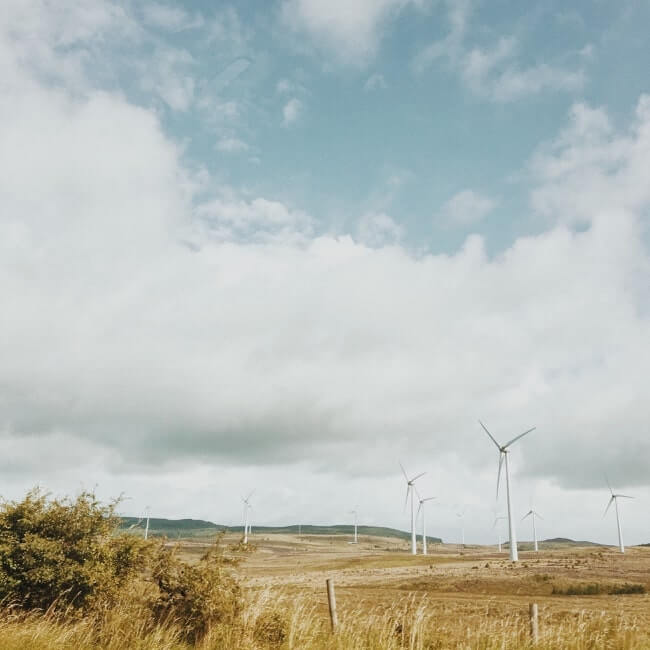
Chile has an extraordinary advantage: it has some of the best solar resources on the planet in the north and enormous wind power potential in different areas of the country. We have been able to attract investment and build significant renewable generation capacity.
However, we are facing a paradox that is difficult to explain: we have clean energy that we cannot always transport to where it is most needed.
The result is the spilling of renewable energy. In 2025, more than 6,000 GWh of renewable energy were spilled due to system bottlenecks. In other words, while we discuss how to reduce emissions and replace fossil fuels, part of the clean electricity that could contribute to that goal simply does not reach the consumption centers.
The third element is perhaps less visible but equally important: a true local CO₂ emissions trading system for the power sector to replace, once and for all, the misnamed and inefficient green tax.
The Ministry of Energy has been working in this direction for years. In fact, the recently approved energy policy explicitly contemplates the design and implementation of an emissions trading system in the energy sector, including a voluntary pilot supported by the World Bank, precisely with the aim of moving toward cost-effective decarbonization.
This tool deserves to be taken much more seriously.
A well-designed emissions trading system makes it possible to turn emissions reduction into an economic decision, and not just a regulatory one. Those who can reduce emissions at lower cost will have incentives to do so and will be able to generate value by trading their surpluses. Those who face higher costs to reduce will have the option of buying rights or units within a regulated market.
The advantage is clear: the environmental goal is maintained, but the market helps determine where it is cheapest to achieve it.
International experience shows that carbon markets can become a key component of decarbonization policies when they have clear rules, appropriate emission limits, monitoring, verification, and a predictable regulatory trajectory.
The climate discussion usually focuses on targets: how much we must achieve by 2040 and how to reach carbon neutrality by 2050. This is necessary. But targets, by themselves, do not reduce a single ton of CO₂; they are statements of good intentions.
What reduces emissions are investments, technologies, economic signals, and enabling conditions for the private sector.
That is why a truly effective Long-Term Climate Strategy should place three questions at the center.
First: how do we massively electrify our economy?
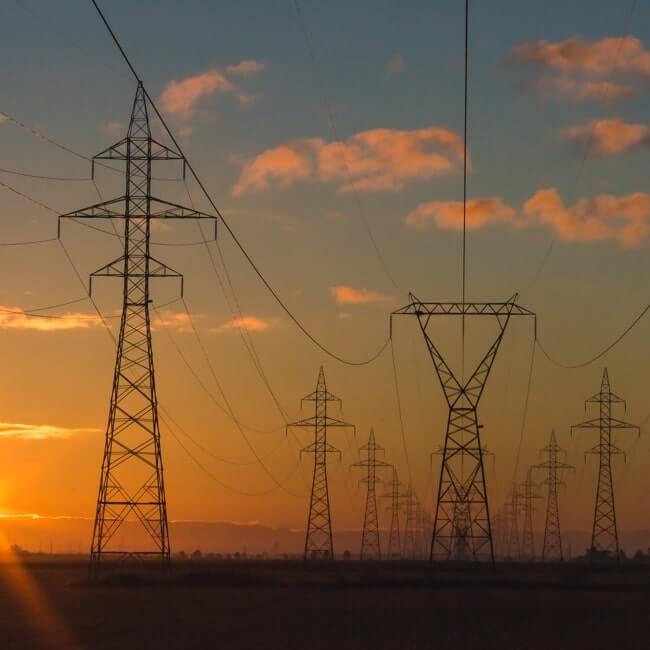
Second: how do we build, with sufficient lead time, the transmission and distribution that will allow that clean electricity to reach where it is needed?
And third: how do we strengthen economic instruments so that reducing emissions is also a financially attractive decision?
If we first build the enabling conditions, climate goals will be much easier — and probably much cheaper — to achieve.
On the other hand, if we keep adding targets without simultaneously addressing the physical and economic constraints facing the energy system, we run the risk of building a climate strategy that is technically ambitious but economically difficult to implement.
Because in climate policy, as in so many other things, reaching the goal depends less on declaring the destination than on building the path to get there in time.
The content is the sole responsibility of the author and does not necessarily reflect the opinion of BNamericas. We invite those interested in participating as Guest Columnists to submit an article for possible publication. To do so, contact the editor at mplace@bnamericas.com.
Subscribe to the leading business intelligence platform in Latin America with different tools for Providers, Contractors, Operators, Government, Legal, Financial and Insurance industries.
News in: Oil & Gas (Chile)
Chile draft PELP long-term energy planning report – key takeaways
Chile's draft 30-year energy plan, under a baseline scenario, projects up to 112GW of new wind, solar and battery capacity through 2057, with float...
Daily headlines: Mexico pledges US$4.4 billion to transform densest region
Follow the most recently published highlights from BNamericas’ content team.
Subscribe to Latin America’s most trusted business intelligence platform.
Other projects in: Oil & Gas (Chile)
Get critical information about thousands of Oil & Gas projects in Latin America: what stages they’re in, capex, related companies, contacts and more.
- Project: Tierra del Fuego Green Energy
- Current stage:

- Updated:
6 months ago
- Project: Gente Grande
- Current stage:
- Updated:
7 months ago
- Project: INNA (Hydrogen Plant)
- Current stage:
- Updated:
7 months ago
- Project: Vientos Magallánicos
- Current stage:
- Updated:
11 months ago
- Project: Block Dorado-Riquelme
- Current stage:
- Updated:
10 months ago
- Project: Antofagasta Mining Energy Renewable (Amer)
- Current stage:
- Updated:
1 year ago
- Project: M-AAMB oil pipeline - second line
- Current stage:
- Updated:
1 year ago
- Project: LNG maritime terminal Talcahuano
- Current stage:
- Updated:
1 year ago
- Project: Block Campanario
- Current stage:
- Updated:
2 years ago
- Project: Block Isla Norte
- Current stage:
- Updated:
2 years ago
Other companies in: Oil & Gas (Chile)
Get critical information about thousands of Oil & Gas companies in Latin America: their projects, contacts, shareholders, related news and more.
- Company: Técnica Nacional de Servicios de Ingeniería y Construcción S.A. (Tecnasic)
-
Técnica Nacional de Servicios de Ingeniería y Construcción S.A. (Tecnasic) is a Chilean engineering, construction, and industrial installation company of th local construction f...
- Company: Gasoducto del Pacífico S.A. (Gasoducto del Pacífico)
-
Gasoducto del Pacífico S.A. is headquartered in Concepción, Chile, and is engaged in natural gas transport through a pipeline system from Neuquén province, in Argentina, to the ...
- Company: Innergy Transportes S.A. (Innergy Transportes)
-
Innergy Transportes, a subsidiary of Chilean natural gas trading company Innergy Holdings, engages in the construction and operation of natural gas transport networks, by itself...
- Company: Statkraft Chile Inversiones Eléctricas Ltda. (Statkraft Chile)
-
Since 2004, Statkraft Chile Inversiones Eléctricas Ltda. has being operating as an electric power generation and transmission company in Santiago. Currently, it builds and devel...
- Company: Corporación de Fomento de la Producción (Corfo) (Corfo)
-
Chilean state development agency Corfo administers a range of services and incentives designed to promote and help business investments in Chile. It promotes economic developmen...
- Company: GasValpo S.A. (GasValpo)
-
Chile-based GasValpo S.A. distributes natural gas to over 90,000 residential, commercial and industrial customers through a 1,500km network. In 2008 it took over distributor Ene...
- Company: Pan American Energy Chile Ltda. (Pan American Energy Chile)
-
Pan American Energy Chile Ltda., a subsidiary of Argentine firm Pan American Energy, is engaged in the exploration and production of oil and natural gas. The company owns block ...
- Company: SAAM Towage Chile SpA (SAAM Towage)
-
SAAM Towage is a tugboat operator offering port and offshore towage services in more than 90 ports and 13 countries, from Prince Rupert, Canada, to Chile in the far south, throu...
- Company: PRDW Aldunate Vásquez Ingenieros Ltda. (PRDW Chile)
-
The description included in this profile was taken directly from an official source and has not been modified or edited by the BNamericas’ researchers. However, it may have been...
- Company: Samson Controls S.A. (Samson Chile)
-
Samson Controls S.A. is a regional affiliate of the German firm SAMSON AG, founded in 1907. In Latin America, it maintains operations in Chile (Santiago) under the name SAMSON C...
Subscribe to the leading business intelligence platform in Latin America with different tools for Providers, Contractors, Operators, Government, Legal, Financial and Insurance industries.