AMLO’s economic crisis plan disappoints the private sector
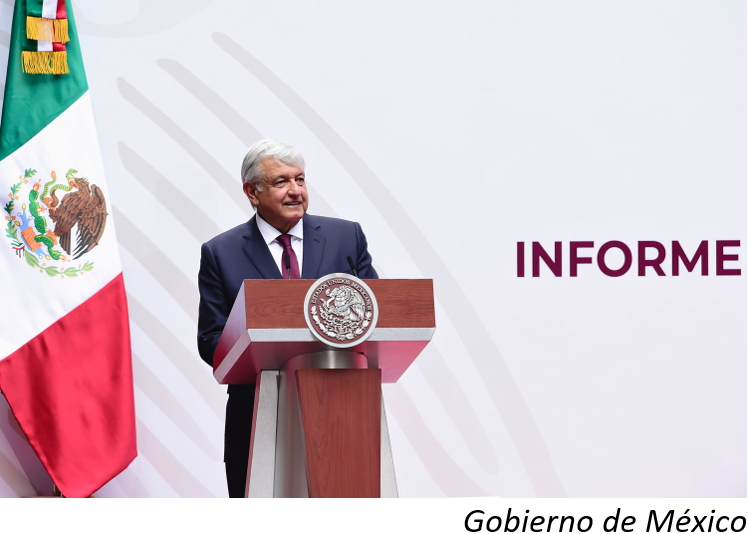
President Andrés Manuel López Obrador's public investment plan to offset the fallout in Mexico from the coronavirus pandemic is being deemed insufficient by the private sector, which criticizes the lack of support for small and medium-sized enterprises.
Key pillars of the plan unveiled Sunday include the creation of 2mn construction sector jobs, mainly at works on the US$6.7bn Maya train, the US$3.9bn Felipe Ángeles international airport (AIFA), the Tehuantepec isthmus interoceanic corridor, and the Dos Bocas oil refinery.
“We are going to reactivate the construction industry,” AMLO said at his morning press conference on Monday, adding that the Maya train and interoceanic corridor will generate 87,300 jobs.
Construction for the airport, the rail corridor and the refinery has already begun, while works for the Maya train will begin on April 30.
The president also said that 25bn pesos (US$1bn) will go to clean water, drainage and paving projects, and the construction and improvement of 50,000 homes in marginalized areas. These works would create 228,000 jobs.
AMLO promised to present the second stage of the 2020-24 infrastructure program (PNI) next week. This stage includes several energy projects with estimated private and public investments of 339bn pesos.
PRIVATE SECTOR CONCERNS
Mexico’s largest business association, CCE, which played a key role in drafting the PNI, sent the president on March 18 a list of 21 recommendations to buoy the economy amidst the health crisis.
In a statement from Monday, CCE said it welcomes the increase in public investment, the expansion of social programs and a federal order to speed up tax returns.
Yet, “unfortunately, it seems to us an incomplete response to the great dimension of the crisis we are facing,” CCE said.
“We have seen closed doors for our proposals,” CCE president Carlos Zalazar Lomelín told reporters on Monday at a web conference, adding that the private sector never asked for tax cuts or relief packages, just federal support for SMEs.
The association, according to Zalazar, asked the president to start the PNI's second stage as soon as possible and to create three new programs.
But Zalazar said the CCE still does not know what the second stage will include, so the private sector cannot yet confirm any investments. “We have to see if there is interest in the private sector to invest.”
One of three programs CCE also proposed would include the launch at least one major infrastructure project in each state using Mexico's remaining credit for the year. A second program would boost trade with the US to fill the gap China's downturn left, and third would be a devaluation program to increase investment.
Zalazar does not expect new investment in the next 90 days and thinks the government’s 2mn jobs goal is hard to accomplish.
“Employment is created by the private sector,” not the public one, he said.
CONSTRUCTION SECTOR
Resurrecting the construction sector has remained a pending task for the AMLO administration since 2019, when the industry reported its worst productivity numbers since 2013.
The administration wanted to activate the economy with the first stage of the PNI, which introduced 147 infrastructure projects in November. But the spread of COVID-19 raised concerns over the continuity of some works, with experts asking AMLO to halt his main projects and prioritize the contingency strategy.
But AMLO rejected the experts' view because the works would be important for economic growth and employment during and after the crisis.
Unlike other associations representing the private sector, construction chamber CMIC asked the government on April 2 to classify construction as “essential activity” to keep productivity up and protect jobs.
The chamber represents 12,000 companies and said it had adopted health ministry measures to prevent the spread of COVID-19 in public works.
Cement producer Cemex, however, said Monday that will suspend operations until April 30 in line with health ministry guidelines. Authorities classified Cemex's activities as "non-essential."
Photo credit: Gobierno de México
Subscribe to the leading business intelligence platform in Latin America with different tools for Providers, Contractors, Operators, Government, Legal, Financial and Insurance industries.
News in: Political Risk & Macro (Mexico)

Mexico avoids payment of US$315mn to Silver Bull
The court dismissed all of Silver Bull's claims for lack of jurisdiction and ordered the miner to reimburse part of the arbitration costs and expen...
Brazil and Mexico: Digital infrastructure shapes FDI ICT flows
Record FDI inflows are reinforcing Brazil's and Mexico's positions as Latin America's top investment destinations, although their telecom investmen...
Subscribe to Latin America’s most trusted business intelligence platform.
Other projects
Get key information on thousands of projects in Latin America, from current stage, to capex, related companies, key contacts and more.
- Project: Marudi Mountain (Marudi)
- Current stage:

- Updated:
13 hours ago
- Project: Pampa Gallinazos Photovoltaic Plant
- Current stage:
- Updated:
13 hours ago
- Project: Matraca Maya Photovoltaic Park
- Current stage:
- Updated:
13 hours ago
- Project: Modernization of the Luiz Gonzaga HPP
- Current stage:
- Updated:
13 hours ago
- Project: Claudia
- Current stage:
- Updated:
15 hours ago
- Project: La Rioja
- Current stage:
- Updated:
16 hours ago
- Project: Sarita
- Current stage:
- Updated:
16 hours ago
- Project: Bajo Pobre
- Current stage:
- Updated:
16 hours ago
- Project: Capacity Expansion of the Luiz Gonzaga Hydroelectric Plant (Ex Itaparica)
- Current stage:
- Updated:
16 hours ago
- Project: El Gateado
- Current stage:
- Updated:
16 hours ago
Other companies in: Political Risk & Macro
Get key information on thousands of companies in Latin America, from projects, to contacts, shareholders, related news and more.
- Company: Departamento Nacional de Planeación (DNP)
-
The Departamento Nacional de Planeación (DNP) is a Colombian government entity responsible for national development planning, public investment coordination and economic policy ...
- Company: Comisión Especial de Agua Segura para el Chaco (Comisión Especial Agua para el Chaco)
-
Comisión Especial de Agua Segura para el Chaco is a special legislative commission of the Cámara de Senadores (Senate) of Paraguay, operating in the public sector and water infr...
- Company: State of Minas Gerais (Government of the State of Minas Gerais)
-
The State of Minas Gerais is a subnational government entity in Brazil that administers the Government of the State of Minas Gerais, headquartered in Belo Horizonte, Minas Gerai...
- Company: Ministerio de Obras Públicas y Transportes (MOPT)
-
Ministerio de Obras Públicas y Transportes (MOPT) is the public ministry of the Government of Costa Rica responsible for transport policy and infrastructure management. The inst...
- Company: Government of the State of Baja California
-
Government of the State of Baja California is the executive branch of the government of the Mexican state of Baja California. The state government was formally established with ...
- Company: Gobierno Autónomo Municipal de Santa Cruz de la Sierra (Alcaldía Municipal de Santa Cruz de la Sierra)
-
The Gobierno Autónomo Municipal de Santa Cruz de la Sierra (GAMSC) is a public sector entity responsible for municipal administration in Santa Cruz de la Sierra, Bolivia. It ope...
- Company: Consorcio Interestadual de Desenvolvimento Sustentável do Nordeste (Consórcio Nordeste)
-
Consórcio Interestadual de Desenvolvimento Sustentável do Nordeste, known as the Consórcio Nordeste, is an inter-federative public entity created in 2019 by a protocol of intent...
- Company: Distrito Especial, Industrial y Portuario de Barranquilla – Alcaldía de Barranquilla. (Alcaldía de Barranquilla)
-
Alcaldía de Barranquilla is the local government authority of the Distrito Especial, Industrial y Portuario de Barranquilla in Colombia. It operates within the public administra...
- Company: Secretaría de Movilidad del Estado de México
-
Secretaría de Movilidad del Estado de México (SEMOV) is a state-government agency in Mexico’s public administration sector. It plans, regulates, coordinates and supervises mobil...
- Company: Municipio de Naucalpan de Juárez (Gobierno Municipal de Naucalpan de Juárez)
-
The Municipality of Naucalpan de Juárez is a local government entity in the State of Mexico, Mexico , that administers public services, urban planning, and social development in...
Subscribe to the leading business intelligence platform in Latin America with different tools for Providers, Contractors, Operators, Government, Legal, Financial and Insurance industries.