From batteries to underground data centers: What the amendments to Brazil's ReData say
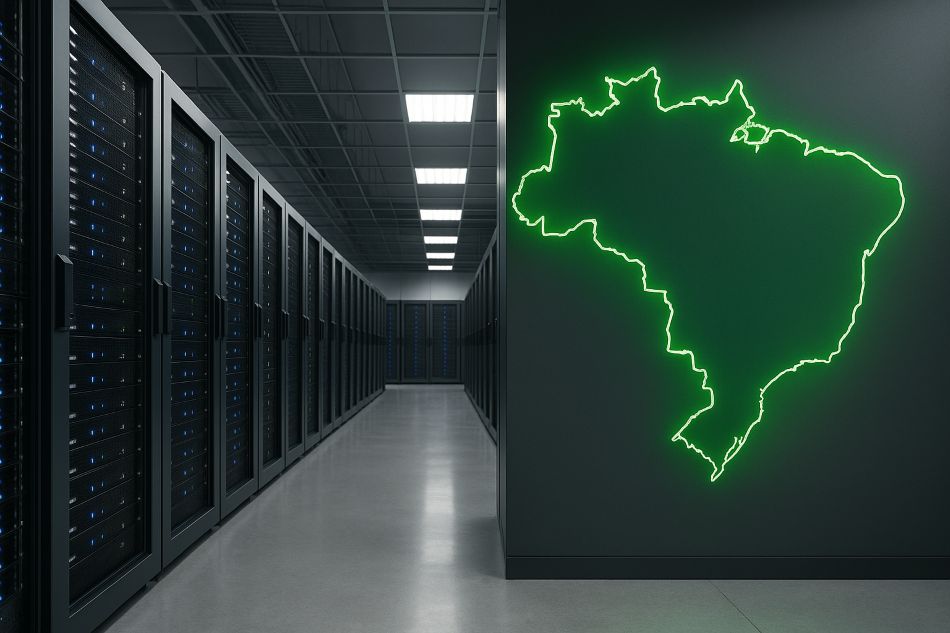
While awaiting to be placed on the agenda for a vote, bill PL 278, which establishes the special tax regime for data centers (ReData) in Brazil, continues to receive amendments in the Senate.
Approved in the Chamber in February, ReData provides for a five-year exemption from federal taxes – PIS/Cofins, IPI and Import Tax – on the purchase of equipment for data centers. In return, the projects must meet requirements such as investments in renewable energy and the local provision of data storage and processing capacity.
The goal is to attract investment in artificial intelligence and cloud computing, reducing the construction costs of these facilities.
The original provisional measure has lapsed, and the bill (PL 278/2026) is awaiting a vote by the senators. The rapporteur for the proposal in the Senate, Eduardo Gomes, is also the rapporteur for the artificial intelligence bill.
According to a source from the sector with interlocution in Congress, Gomes would have his report “ready to go” for presentation and voting.
Meanwhile, proposals for amendments keep emerging.
By the time this article was published, 12 senators had submitted 15 amendments to the bill. One was withdrawn by the author himself and another was not even considered for deliberation.
The amendments were submitted between February 25 and March 10.
Domestic manufacturing and local content
In the section on equipment eligible for benefits, Senator Eduardo Braga proposes replacing the expression “without a national equivalent” with “lack of equivalent national production capacity”.
According to Braga, the new expression is “more in line with the parameters currently used in industrial and foreign trade policies, including in regulatory acts of the Executive Management Committee of the Foreign Trade Chamber (Gecex/Camex)”.
For the senator, the current wording may generate divergent interpretations among public bodies, creating legal uncertainty and the risk of litigation.
As already reported by BNamericas, the issue is a source of dispute between domestic equipment manufacturers and data center operators.
Braga argues that the new criterion requires an objective comparison between the demand of the projects and the capacity of the industry installed in the country to supply equipment with appropriate technical specifications, performance, quality, deadlines, and quantities.
Senator Omar Aziz submitted an amendment with a similar proposal.
Senator Izalci Lucas, in turn, advocates the creation of local content quotas.
An amendment submitted by him proposes establishing a “minimum local content index for information and communication technology goods, as well as for the machinery and equipment intended for the electrical infrastructure, climate control, automation, and operational support of the data center”.
According to the senator, the measure would help protect jobs and strengthen the national industry.
States, thermoelectric plants and underground data centers
Senator Esperidião Amin submitted an amendment to extend ReData benefits also to locations in the South of Brazil and to non-renewable energy sources, such as coal-fired thermal power plants.
Under the program’s current design, requirements are reduced for projects located in the North, Northeast, and Center-West regions, with the aim of decentralizing investments that are currently concentrated in São Paulo and Rio de Janeiro.
Amin's proposal seeks to include coal regions in Rio Grande do Sul, Santa Catarina, and Paraná, which are undergoing energy transition processes.
"It is necessary to include the possibility of developing data centers in the coal regions of Rio Grande do Sul, Santa Catarina, and Paraná that are undergoing a process of just and inclusive energy transition and need new economic activities to maintain the current level of wage mass and development”.
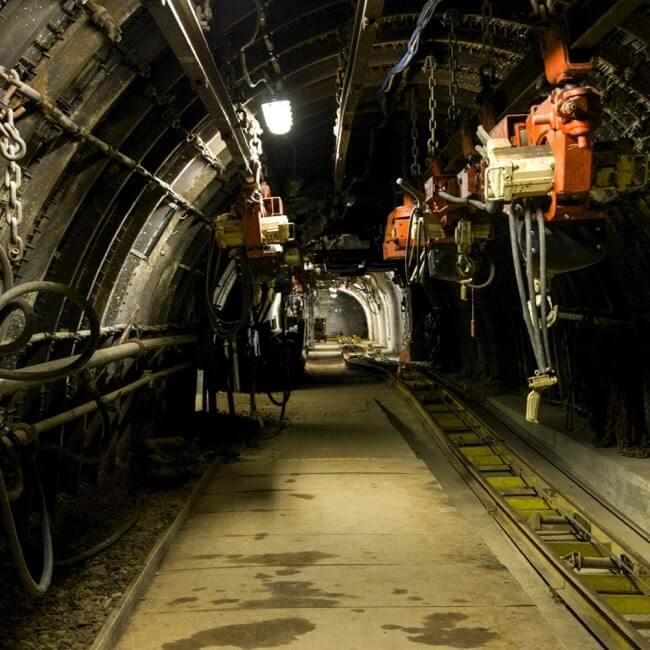
According to the senator, old flooded coal mines could provide water for cooling data centers, citing similar initiatives in Pennsylvania, in the US.
“In the coal-mining regions of Santa Catarina, there are flooded depleted underground mines that are able to supply water for cooling, characterizing a sustainable geothermal cooling system.”
Amin also mentions the possibility of installing underground data centers in these areas, listing Italy and Israel as examples.
According to him, spaces in inactive mines could house these facilities, reducing cooling costs due to the stable underground temperature.
Also from Santa Catarina, Senator Jorge Seif submitted an amendment related to reuse water.
According to the current wording of ReData, projects must have a water efficiency index (Water Usage Effectiveness – WUE) equal to or lower than 0.05 L/kWh, with annual measurement.
Seif’s proposal establishes that, when reused water is used, the requirement is considered automatically met.
According to the senator, a “strict” WUE requirement, even when external reuse is adopted, may discourage more environmentally efficient solutions.
Energy sources and contracting
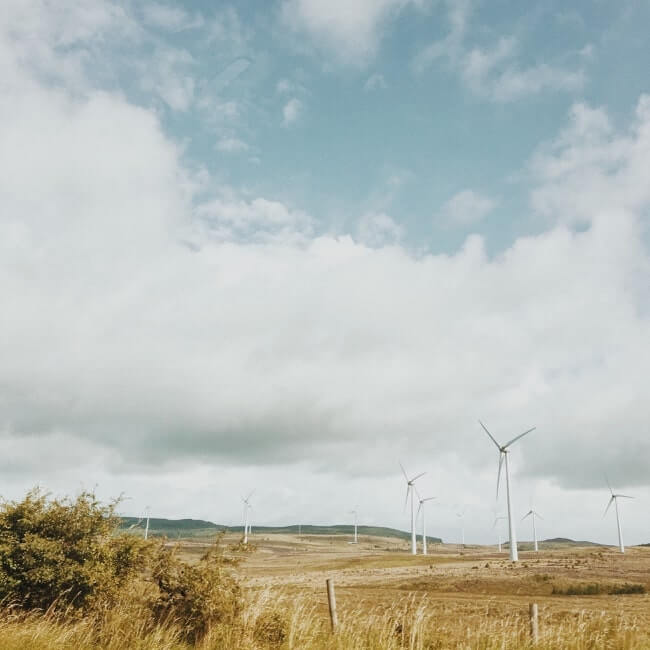
Senator Laércio Oliveira submitted an amendment to reinforce that the energy supply for the projects benefiting from the measure should come through contracts or self-production from renewable or clean sources.
Among them, the senator specifically mentions wind, solar, hydro, and biomass energy.
Senator Luis Carlos Heinze, in turn, presented a proposal to ensure tax reimbursement for thermoelectric power generators within the scope of ReData.
Senator Zequinha Marinho, in turn, introduced changes related to the connection between generation and transmission systems.
He also proposes facilitating the direct negotiation of energy between large consumers, such as data centers, and generators.
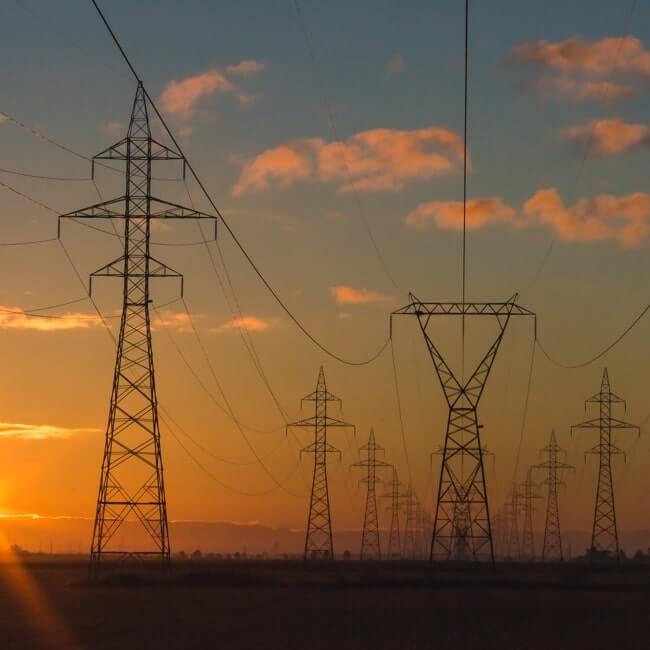
The proposal would allow these projects to connect directly to generation plants, outside the public grid, using the networks only for surpluses or additional demand.
“Consumer access to the basic network is governed by outdated and obsolete rules,” said the senator.
According to him, the current rules hinder new arrangements.
“Such a format proves incompatible with the reality of new industrial and technological projects, whose viability depends on more agile and flexible connection solutions.”
Along the same lines, Senator Wellington Fagundes advocates promoting battery energy storage systems (BESS) and states that the costs of these systems should be shared among different agents in the chain.
According to Fagundes, data centers require a constant power supply over 24 hours, which creates challenges for the operation of the National Interconnected System (SIN).
Currently, the costs of BESS systems fall mainly on power generators. The senator proposes changes to this logic.
For him, this would help to “ensure legal certainty for investments in the electricity sector and in the data center sector, in addition to preserving the economic coherence of the model and the appropriate logic of cost allocation in capacity contracting.”
Senator Irajá also introduced an amendment to extend ReData benefits to projects that use storage batteries.
Export processing zones
The most recent amendment, presented by Senator Marcelo Castro, seeks to reinstate a previous provisional measure that extended the tax benefits of export processing zones (EPZs) to data centers.
The provisional measure had been used by companies such as Casa dos Ventos for TikTok’s data center project in the ZPE of Pecém, in Ceará.
However, as it was not converted into law within the constitutional deadline, it lost its validity.
(The original version of this content was written in Portuguese)
Subscribe to the leading business intelligence platform in Latin America with different tools for Providers, Contractors, Operators, Government, Legal, Financial and Insurance industries.
News in: ICT (Brazil)

Google Cloud triples target and announces commitment to train 3 million Brazilians in AI
In 2025, during Web Summit Rio, the company announced its commitment to train 1 million Brazilians in cloud and AI technologies in the coming years...

Claro launches GPU-as-a-Service offering for AI development in Brazil
Announced during Web Summit Rio 2026, the solution is expected to directly impact startups and companies of all profiles and sizes that are beginni...
Subscribe to Latin America’s most trusted business intelligence platform.
Other projects in: ICT (Brazil)
Get critical information about thousands of ICT projects in Latin America: what stages they're in, capex, related companies, contacts and more.
- Project: Data Center SP08B
- Current stage:

- Updated:
2 months ago
- Project: ODATA SP08A Data Center
- Current stage:
- Updated:
2 months ago
- Project: SP08-Odata
- Current stage:
- Updated:
2 months ago
- Project: São Paulo 5 Data Center (SP5)
- Current stage:
- Updated:
2 months ago
- Project: Microsoft Data Center in Chácaras Recreio Alvorada (Hortolândia Northwest)
- Current stage:
- Updated:
2 months ago
- Project: CloudHQ Rio de Janeiro data center (GIG Campus)
- Current stage:
- Updated:
2 months ago
- Project: NEW SP7 Data Center
- Current stage:
- Updated:
3 months ago
- Project: SP9 Data Center
- Current stage:
- Updated:
3 months ago
- Project: SP8 Data Center
- Current stage:
- Updated:
3 months ago
- Project: Data Center SP6 (IBX)
- Current stage:
- Updated:
3 months ago
Other companies in: ICT (Brazil)
Get critical information about thousands of ICT companies in Latin America: their projects, contacts, shareholders, related news and more.
- Company: Hispamar Satélites S.A. (Hispamar Satélites)
-
Hispamar Satélites (Hispamar) is located in Rio de Janeiro, Brazil and is a subsidiary of Hispasat Group, a Spanish telecommunication satellite operator. Hispamar was founded in...
- Company: Elea Data Centers
-
Elea Data Centers is a sustainable digital infrastructure platform, rooted in Brazil and covering 100% of the country’s major cities, in addition to the Rio-São Paulo axis. The ...
- Company: Brazil Tower Company, LP (BTC)
-
Brazil Tower Company, LP (BTC), incorporated in 2011 in Nova Lima, State of Minas Gerais, is a communication tower constructor, developer and operator, whose main business is th...
- Company: DPR Telecomunicações Ltda. (DPR)
-
The description contained in this profile is taken directly from an official source and has not been edited or modified by BNamericas researchers, but may have been machine tran...
- Company: Lefosse Advogados
-
As a full-service law firm, it offers a comprehensive range of legal services to national and international clients. The advice it provides stems from its partnership with clien...
- Company: Entidade Administradora da Faixa (EAF)
-
Entidade Administradora da Faixa (EAF) is a Brazilian non-profit entity created by mandate of the National Telecommunications Agency (Anatel). Its main mission is to coordinate ...
- Company: WDC Networks
-
The description contained in this profile was taken directly from an official source and has not been edited or modified by BNamericas researchers, but may have been automatical...
- Company: Consórcio Sonda Infovia Digital
- Company: Microsoft Informatica Ltda. (Microsoft Informatica)
-
Microsoft Informatica Ltda., founded in 1989, is a subsidiary of Microsoft Corporation in Brazil.
- Company: Next Level Telecom Ltda. (NLT Telecom)
-
The description included in this profile was taken directly from an official source and has not been modified or edited by BNamericas’ content team. However, it may have been au...
Subscribe to the leading business intelligence platform in Latin America with different tools for Providers, Contractors, Operators, Government, Legal, Financial and Insurance industries.